
[2026 Hong Kong Fortune Teller Recommendations] Looking for an Accurate Master? Check Out 7 Key Selection Secrets + 3 Must-Ask Questions Now!
免費 AI 八字排盤
10 個國際頂尖 AI 模型各自獨立批算再交叉覆核, 並由 1700 年起推演干支,找出與你年、月、日三柱完全相同的歷史真人對照。免費、無需留 Email。
Fortune Telling Must-Read: Five Major Taboos and Common Questions Explained
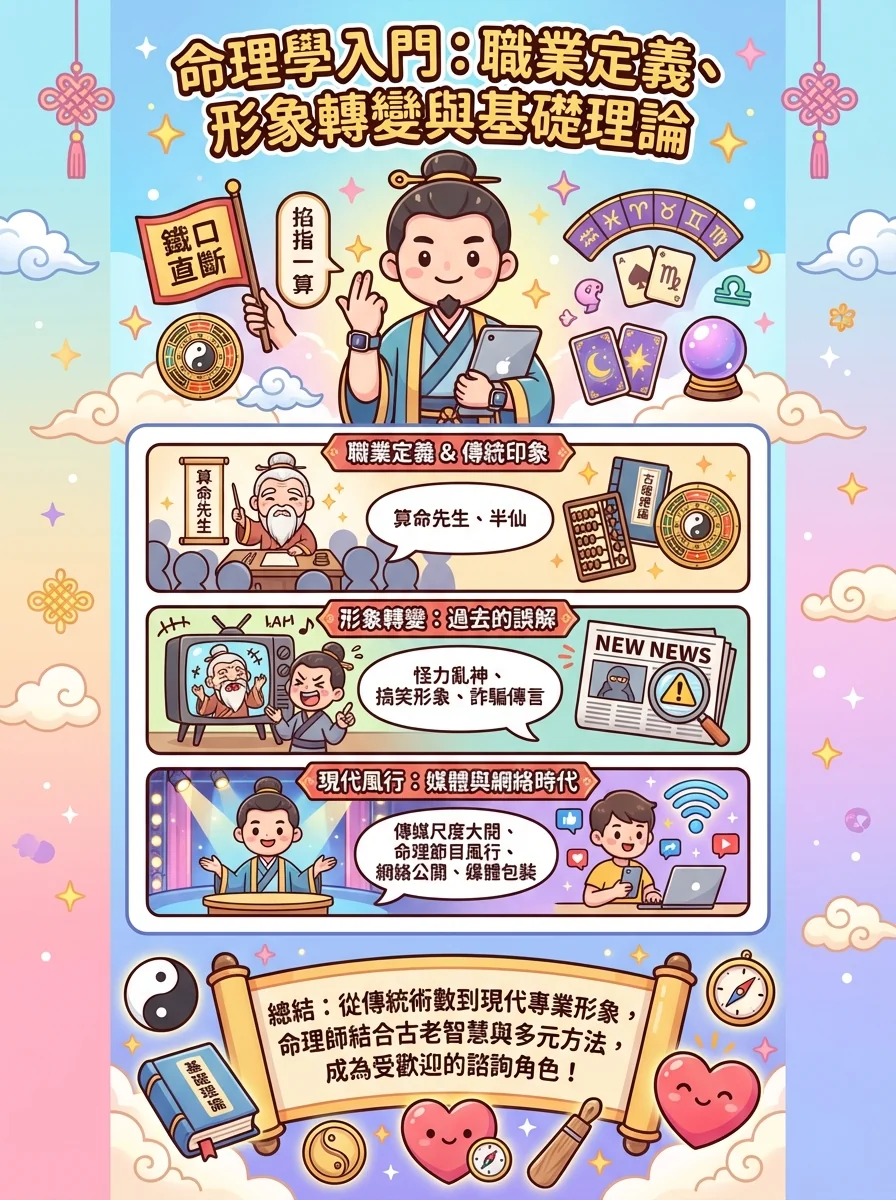
Introduction to Fortune Telling: Professional Definition, Image Transformation, and Basic Theories
When you hear "fortune teller," you might immediately think of folk terms like "fortune-telling master" or "half-immortal." Traditionally, they were often seen setting up stalls on the street, hanging a banner that read "Iron Mouth, Straight Judgment," sporting a pair of Ba Zi mustaches, and mysteriously calculating with their fingers. In reality, a professional fortune teller not only practices fortune-telling but is usually well-versed in other Chinese traditional divination arts, with many also serving as feng shui masters. Today, some fortune tellers even learn Western astrology and Tarot, keeping up with the times.
Looking back, in more politically conservative eras, practices like fortune-telling and feng shui were often dismissed by authorities as "superstition and heresy," so fortune tellers were frequently portrayed as comedic characters on variety shows. Newspaper reports often featured fraudsters using "changing luck" as an excuse to swindle money, tarnishing the reputation of fortune tellers and spawning many rumors about the industry. However, since around the year 2000, media censorship has relaxed significantly, and many fortune-telling programs have become popular, making fortune-telling more mainstream. With the advent of the internet age, fortune-telling gradually moved online. After media packaging, some fortune tellers have even been promoted like celebrities. Amidst this great transformation, the social status of many ancient professions has changed dramatically. Just as being an entertainer was once not considered a noble profession but is now highly sought after, fortune tellers have experienced a similar reversal in image and status.
To learn fortune-telling, the first step must start with the most basic "Heavenly Stems and Earthly Branches." The Heavenly Stems and Earthly Branches, abbreviated as "Stems and Branches," are a crucial symbolic system in ancient China used to calculate years, months, days, and hours. This system consists of ten "Heavenly Stems" and twelve "Earthly Branches," which combine to form sixty pairs, known as the "Sixty Jiazi." The ancients believed that heaven has its patterns (the Way of Heaven), earth has its laws (the Way of Earth), and human destiny (the Way of Humanity) operates under the influence of these celestial and terrestrial laws. To grasp these patterns, the ancients invented the Stems and Branches system to record changes in time and space and predict the development of all things. Simply put, the Heavenly Stems are like the sky, and the Earthly Branches are like the earth. Everything grows on the ground, but how well it grows depends on the timing from the heavens.
與其自己猜,不如讓 10 個 AI 一齊批:
• 今年運勢是好是壞?
• 財運事業運何時到?
• 哪個時期最適合投資?
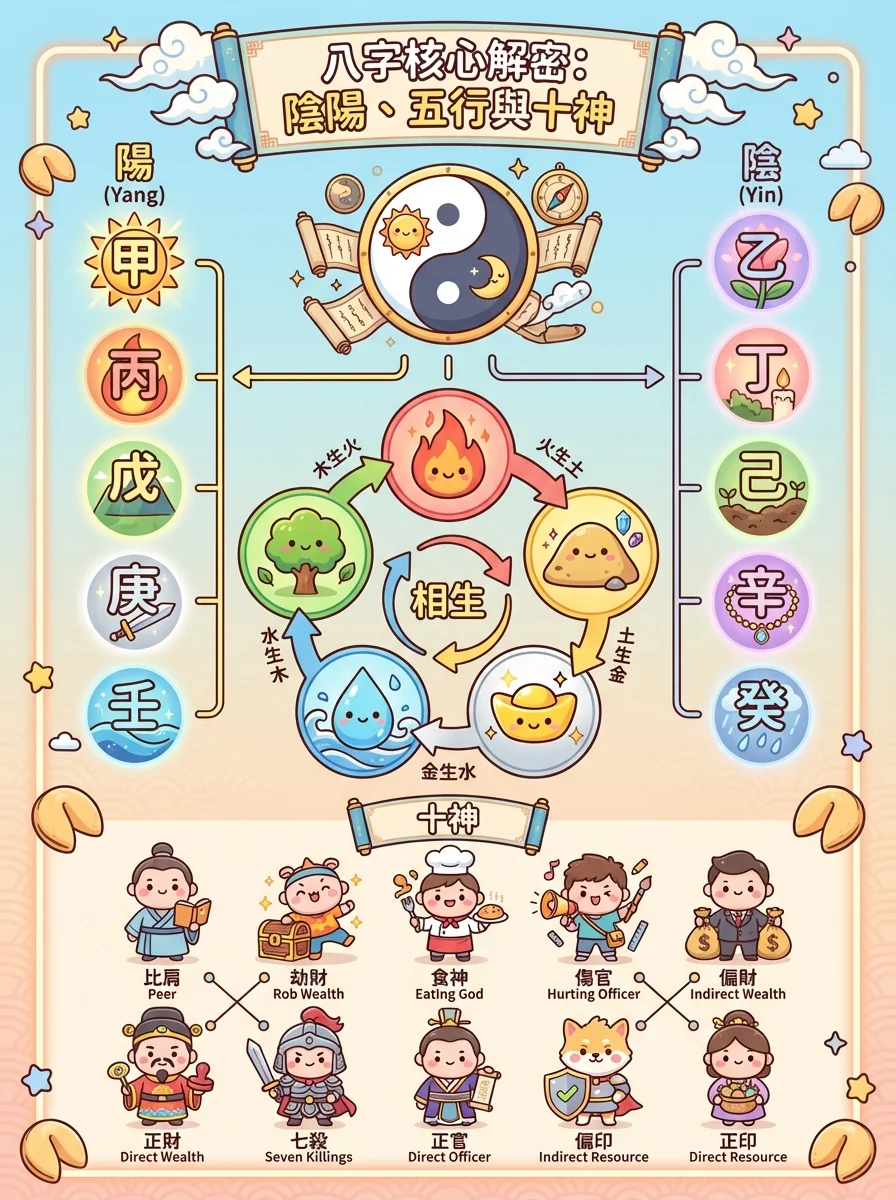
- Ten Heavenly Stems: Jia, Yi, Bing, Ding, Wu, Ji, Geng, Xin, Ren, Gui. The odd-numbered Jia, Bing, Wu, Geng, Ren are "Yang Stems"; the even-numbered Yi, Ding, Ji, Xin, Gui are "Yin Stems."
- Twelve Earthly Branches: Zi, Chou, Yin, Mao, Chen, Si, Wu, Wei, Shen, You, Xu, Hai. The odd-numbered Zi, Yin, Chen, Wu, Shen, Xu are "Yang Branches"; the even-numbered Chou, Mao, Si, Wei, You, Hai are "Yin Branches." These twelve branches also correspond to the twelve Chinese zodiac animals: Zi (Rat), Chou (Ox), Yin (Tiger), Mao (Rabbit), Chen (Dragon), Si (Snake), Wu (Horse), Wei (Goat), Shen (Monkey), You (Rooster), Xu (Dog), Hai (Pig).
The ancients combined the Heavenly Stems and Earthly Branches to calculate years, following the rule "Yang Stem pairs with Yang Branch, Yin Stem pairs with Yin Branch." For example, the first year uses the first Yang Stem "Jia" paired with the first Yang Branch "Zi," making it the "Jiazi Year." The second year follows sequentially, using the second Yin Stem "Yi" paired with the second Yin Branch "Chou," becoming the "Yichou Year." This cycle continues. By the eleventh year, after the ten Heavenly Stems are used up, it starts again with the first Stem "Jia" paired with the eleventh Branch "Xu," which is the "Jiaxu Year." When the Heavenly Stem "Jia" and the Earthly Branch "Zi" meet again, it marks the completion of a full cycle (one Jiazi), totaling sixty years.
Each Stem and Branch is not just a symbol but carries vivid meanings, mostly related to the growth cycles of nature:
- Jia: Like a seed just breaking through the soil, with yang energy still wrapped in the earth, ready to exert force.
- Yi: A plant just born, with soft, tender branches and leaves growing in a winding, curling manner.
- Bing: Meaning "bright," like the fierce sun, with blazing flames.
- Ding: The plant becomes strong and sturdy, like a person reaching adulthood.
- Wu: Meaning "lush," symbolizing the flourishing of plants and trees on the earth.
- Ji: Has meanings of "rising" and "order," as all things transform from curled to stretched, beginning to take shape.
- Geng: Meaning "change" or "replacement," like harvesting in autumn and waiting for next spring, signifying renewal.
- Xin: Has the meaning of "new," as all things mature and bear fruit in autumn, yielding a new harvest.
- Ren: Meaning "pregnancy," with yang energy hidden underground, all things seem to be pregnant, nurturing new life.
- Gui: Meaning "measure" or "plan," all things are stored away, like seeds in the ground, waiting for the chance to sprout.
- Zi: Meaning "to multiply," yang energy begins to sprout, and all things reproduce at the base.
- Chou: Meaning "to knot" or "to tie," in the freezing cold, all things huddle together.
- Yin: Has meanings of "to evolve" and "moisture," as plants welcome the spring sunlight and stretch towards the ground.
- Mao: Meaning "luxuriant," all things are illuminated by the sun and grow abundantly.
- Chen: Meaning "to shake" and "to extend," all things grow stimulated by vibration.
- Si: Yang energy has already spread across the earth, meaning "already" completed.
- Wu: Meaning "to oppose" or "to cross," all things are full, yin and yang intertwine, with yang energy at its peak and yin energy beginning to grow.
- Wei: Meaning "dim" or "obscure," as the sun passes noon and begins to set, yang energy gradually weakens.
- Shen: Has the meaning of "to extend," the forms of all things are fully shaped.
- You: Meaning "achievement," all things have already fully matured.
- Xu: Meaning "to extinguish," all things wither, and vitality ceases.
- Hai: Meaning "kernel" or "core," all things are stored away, turning into hard seeds, preparing for winter.
By now, you might find the Heavenly Stems and Earthly Branches quite complex and wonder what your own Ba Zi is like. Actually, there's a very convenient method nowadays. You might want to try Master Xuan Shen's Free Divination Service. Results are available in as fast as 3 hours, and it can also analyze your 2026 Annual Fortune. It's completely free and very convenient!
Fortune Telling Must-Read: Five Major Taboos and Common Questions Explained
Core Secrets of Ba Zi: Yin-Yang, Five Elements, and Ten Gods
After understanding the Heavenly Stems and Earthly Branches, it's time to delve into the three core components of Ba Zi fortune-telling: Yin-Yang, the Five Elements, and the Ten Gods. Together, these form a sophisticated system used to interpret a person's destiny traits and future trends.
First is "Yin-Yang," a fundamental concept in ancient Chinese philosophy that believes all things in the universe can be divided into two opposing yet interdependent aspects. In Ba Zi, both the Heavenly Stems (Jia, Bing, Wu, Geng, Ren are Yang; Yi, Ding, Ji, Xin, Gui are Yin) and Earthly Branches (Zi, Yin, Chen, Wu, Shen, Xu are Yang; Chou, Mao, Si, Wei, You, Hai are Yin) have Yin-Yang attributes. How well the Yin-Yang is balanced is one of the important indicators for judging the quality of a destiny chart.
一個 AI 可能錯,10 個一齊講同一件事呢?
Next are the "Five Elements," namely Wood, Fire, Earth, Metal, and Water. They are the five basic elements or energies that constitute all things in the universe. The relationships of generation and restriction among the Five Elements are key to Ba Zi analysis.
- Five Elements Generation Cycle: Wood generates Fire (wood can burn to create fire), Fire generates Earth (fire turns to ashes, which is earth), Earth generates Metal (metals are formed within the earth), Metal generates Water (metal condenses moisture when cold), Water generates Wood (water nourishes trees to grow). This is a cycle of mutual generation and nourishment.
- Five Elements Restriction Cycle: Wood restricts Earth (tree roots penetrate soil), Earth restricts Water (earth can block water), Water restricts Fire (water can extinguish fire), Fire restricts Metal (fire can melt metal), Metal restricts Wood (metal can cut wood). This is a relationship of mutual restraint, maintaining balance to prevent any one element from becoming too strong and causing imbalance.
Correspondence of Five Elements with Personality and Professions
- Wood: Governs "Benevolence." Personality is usually straightforward, kind-hearted, but can sometimes be stubborn and inflexible.
- Fire: Governs "Propriety." Temperament is relatively impatient, but the person is passionate and courteous.
- Earth: Governs "Trustworthiness." The person is honest, reliable, and keeps promises, but can sometimes be rigid and lack flexibility.
- Metal: Governs "Righteousness." Personality is strong-willed, decisive, and values loyalty.
- Water: Governs "Wisdom." Intelligent, flexible, full of ideas, but also prone to change and instability.
Understanding the favorable and unfavorable Five Elements in your Ba Zi is very helpful for choosing the right career path for your development, making efforts more effective. For example, Wood-element industries include forestry, furniture, culture, and education; Fire-element industries include electronics, energy, and catering; Earth-element industries include real estate, construction, and agriculture; Metal-element industries include finance, hardware, and machinery; Water-element industries include shipping, aquaculture, and service industries, etc.
Finally, the "Ten Gods" can be considered the essence of Ba Zi fortune-telling. They represent the ten different names given to the relationships between the other Heavenly Stems in the destiny chart and the "Day Master" (the Heavenly Stem representing oneself), based on the generation and restriction relationships of the Five Elements. The Ten Gods not only represent people (like parents, children, spouse) but also symbolize various social relationships, personal mindsets, talents, and desires.
- What generates me is the "Resource Star": Divided into Direct Resource and Indirect Resource (Robber God). Represents mother, elders, studies, protection, and thought.
- What I generate is the "Output Star": Divided into Eating God and Hurting Officer. Represents children, talent, eloquence, creativity, and emotional expression.
- What restricts me is the "Power Star": Divided into Direct Power and Indirect Power (Seven Killings). Represents career, boss, authority, pressure, and for women, also represents husband.
- What I restrict is the "Wealth Star": Divided into Direct Wealth and Indirect Wealth. Represents wealth, father, and for men, also represents wife, practicality.
- What is the same as me is the "Peer Star": Divided into Direct Peer and Rob Wealth. Represents siblings, friends, colleagues, competition, and self-awareness.
Each of the Ten Gods has both positive and negative aspects. For example, when "Direct Power" is auspicious, it represents an upright, law-abiding, and responsible person; but when inauspicious, it may lead to timidity, conservatism, and great pressure. When "Seven Killings" is auspicious, it represents authority, decisiveness, and drive; but when inauspicious, it may bring disaster, violence, or villains. Analyzing the strength, position, and relationships among the Ten Gods within the destiny configuration is the primary method for inferring a person's character, career, wealth luck, marriage, and other aspects of fortune. If you want to understand your destiny more deeply, you might want to try Master Xuan Shen's Free Divination Service. Results are available in as fast as 3 hours, and it can analyze your 2026 Annual Fortune. It's completely free, and many people say it's very accurate!
Fortune Telling Must-Read: Five Major Taboos and Common Questions Explained
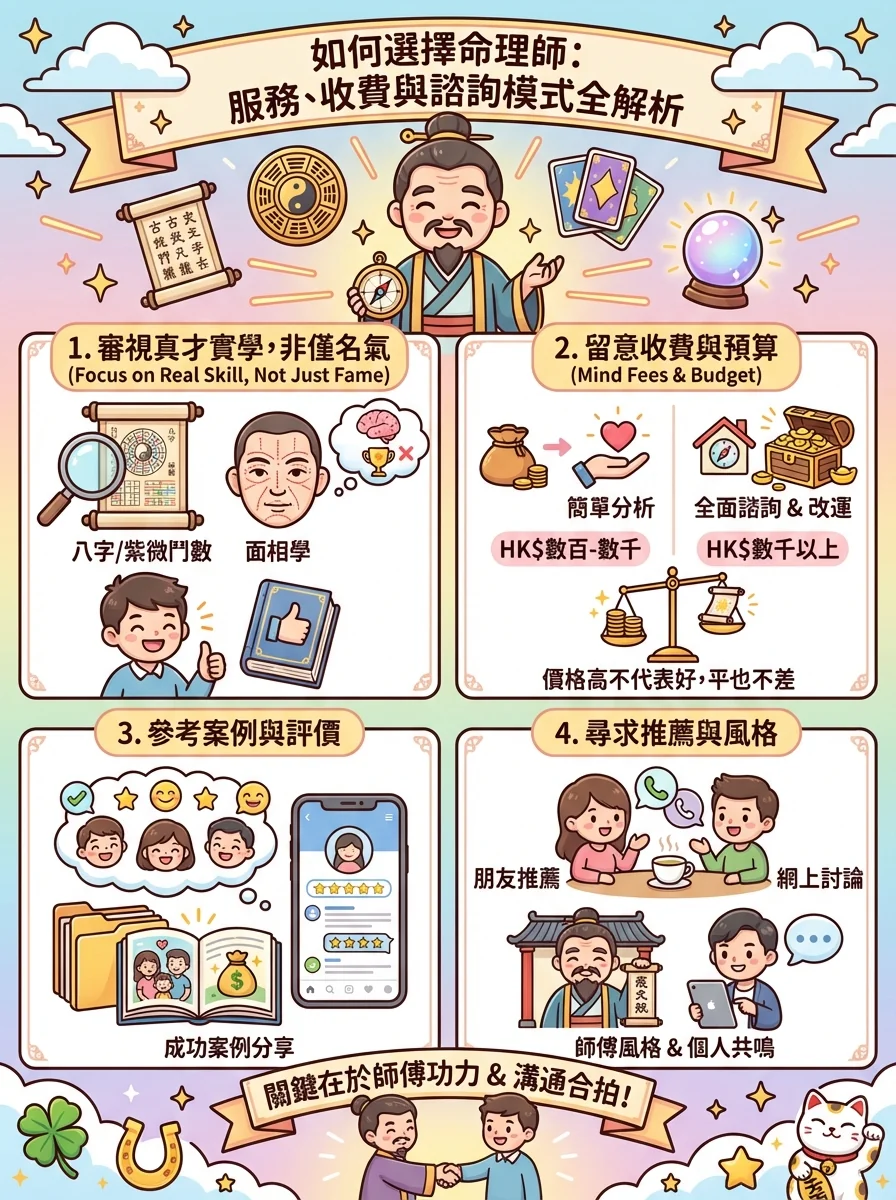
How to Choose a Fortune Teller: A Complete Guide to Services, Fees, and Consultation Models
If you want to find a trustworthy fortune teller to analyze your fortune or arrange feng shui layouts, you need to know how to choose wisely. First and foremost, the most important thing is to see if the fortune teller has genuine knowledge and skill, not just how famous they are. You should pay attention to how accurate their Ba Zi or Zi Wei Dou Shu readings are. If you want a face reading, you can refer to the methods of traditional schools. Secondly, pay attention to whether the fees are reasonable. Nowadays, fees for fortune-telling consultations range from a few hundred to tens of thousands of Hong Kong dollars. You should decide based on your budget and needs. For example, if you just want to ask briefly about wealth or health luck, the cost might be lower; but if you want a comprehensive fortune-telling consultation, including Five Elements balance and luck-changing advice, the fee may be several thousand dollars or more. Remember, expensive doesn't necessarily mean good, and cheap doesn't necessarily mean bad; the key is the master's skill. Additionally, you can check if the fortune teller has any actual case studies or client testimonials. Sharing successful cases can help you judge their reliability. If you want to ask about palmistry or Qi Men Dun Jia, you can ask friends for recommendations or look up related discussions online. Finally, pay attention to whether the master's style suits you. Some people prefer precise calculations like Iron Plate Divination, while others prefer more spiritual interpretations like Tarot. Different masters have different styles—some traditional, some modern. Before choosing, it's best to understand if their methods align with your needs.
同一個盤,前人走過怎樣的路?
Speaking of the fortune-telling market fees in 2026, they are indeed diverse. Traditional methods like Zi Wei Dou Shu and Ba Zi analysis, because they involve deeper analysis, usually have higher fees. For some famous fortune tellers, a complete fortune analysis might cost between HKD 3,000 to 8,000, while top masters' fees can even exceed ten thousand. However, their feng shui layouts and disaster-resolving services do have a good reputation. If your budget is limited, you might consider some newly established fortune tellers, with fees around HKD 500 to 1,500, but be careful when choosing as the quality can vary greatly. Face reading and palmistry usually have lower fees, around HKD 300 to 1,000, suitable for those who want a simple understanding of health or wealth luck. Tarot or Qi Men Dun Jia fees range from HKD 400 to 2,000, depending on complexity. Some rarer fortune-telling methods might have even higher fees, starting from HKD 5,000 is not surprising. The successors of some old master predecessors also charge high fees, with a basic fortune-telling consultation costing HKD 2,000 to 6,000. Five Elements balance analysis fees are relatively moderate, around HKD 1,500 to 4,000. Many fortune tellers offer package services, such as one Ba Zi analysis plus luck-changing advice, which might be more cost-effective. But remember, the most expensive isn't necessarily the best; the most important thing is to find a fortune teller that suits you and to be clear about what you want to ask.
With technology so advanced nowadays, fortune-telling can be done online, but many people still prefer face-to-face consultations. The biggest advantage of online fortune-telling is convenience. Many fortune tellers offer online services; you can ask about career and wealth luck using your phone. Some even use AI to help with chart calculations, saving a lot of time. In terms of fees, online services are usually cheaper, suitable for those with limited budgets or who want to try it out. The downside is lower interactivity, especially for face reading and palmistry. It's hard to accurately see complexion and line depth from just a photo, and disaster-resolving or luck-changing advice may not be as personalized. Conversely, face-to-face fortune-telling, although more expensive, has the advantage that the master can observe your expression, tone, and even the surrounding feng shui layout on the spot. Some believe that only face-to-face can sense the "aura" of the seeker, allowing for precise adjustment of the Five Elements balance. Moreover, the fortune teller can directly help you set up arrangements or provide talismans, which are detailed operations difficult to achieve online. For example, when asking about relationship luck, in a face-to-face setting, the fortune teller can infer more hidden information from your clothing and conversation. However, young people pursuing efficiency have led some fortune tellers to start live-streaming fortune-telling, providing real-time interaction. Ultimately, which method to choose depends on whether you prioritize efficiency or depth. If you're still undecided, you can try a free service first. For example, Master Xuan Shen's Free Divination Service is free and fast, with results in as fast as 3 hours, and can also check your 2026 fortune. You can decide after trying it.
Fortune Telling Must-Read: Five Major Taboos and Common Questions Explained
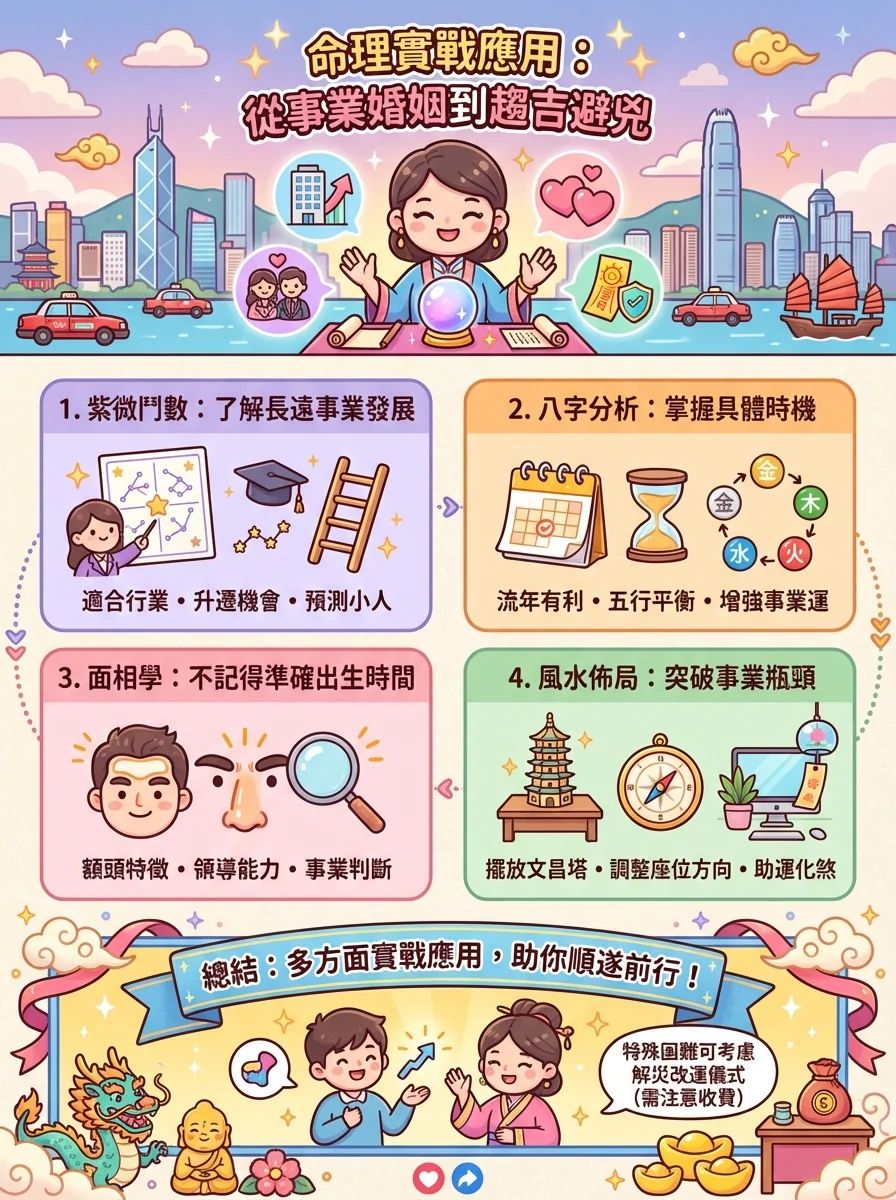
Practical Applications of Fortune Telling: From Career and Marriage to Attracting Good Fortune and Avoiding Misfortune
In Hong Kong's highly competitive society, many people seek guidance from fortune tellers regarding their career luck. For those wanting to understand long-term career development, Zi Wei Dou Shu is a very popular tool. It calculates your destiny chart based on your birth year, month, day, and hour, analyzing your Career Palace and other relevant palaces to see which industry suits you, if there are promotion opportunities, or even if you'll encounter villains. If you want to grasp specific timing, Ba Zi analysis is more suitable. Through the birth Ba Zi, a fortune teller can see which major life cycle and annual cycle are most favorable for your career, analyze your Five Elements balance, and provide suggestions to enhance career luck. For those who don't remember their exact birth time, face reading is also a good choice. A fortune teller can judge your career luck and leadership ability based on features of your forehead, eyebrows, nose bridge, etc. If you hit a bottleneck in your career, you might consider arranging feng shui layouts, such as placing a Wen Chang Pagoda or adjusting your seat direction, which can greatly help your career. For those facing particularly difficult challenges in their career, disaster-resolving or luck-changing rituals might help, but these methods usually have higher fees, and their effectiveness varies from person to person.
When it comes to marriage fortune-telling, different methods have their own strengths. Traditional Zi Wei Dou Shu can deeply analyze the Spouse Palace and Peach Blossom Stars, predicting when you'll meet your destined partner and bad relationships. Ba Zi analysis combined with modern psychology not only suggests the best years to marry but also provides communication skills for couples, which is very practical. Methods like Qi Men Dun Jia and Iron Plate Divination are also highly sought after for handling marriage crises and disaster resolution, though their fees are higher. Face reading and palmistry are choices for quick judgment. By observing the state of the "marriage line" or "spouse area," you can immediately understand the stability of your relationship. Additionally, feng shui layouts like adjusting bed positions or placing specific ornaments are also believed to enhance romantic luck.
In the practical application of Ba Zi fortune-telling, analyzing areas like relationships, wealth, and health has its specific methods. When discussing relationships, ancient Ba Zi methods particularly emphasize the distinction of special stars, as different stars represent different types of emotional relationships. For example, "Red Luan" and "Tian Xi" are usually seen as symbols of "destined relationships." If activated in the annual cycle and the effect is auspicious, it often indicates meeting a suitable marriage partner. "Xian Chi" (also called Peach Blossom Star) is mostly related to desire, charm, and socializing. Encountering it in the annual cycle enhances异性缘 (opposite-sex appeal), but it's often short-lived romance. "Hong Yan" represents romance and passion. Encountering it in the annual cycle easily leads to dramatic love stories, but they may not last. By analyzing which Peach Blossom stars are activated in the annual cycle and their auspiciousness or inauspiciousness, one can infer the nature of that year's relationship luck.
Wealth luck analysis is usually related to the Ten Gods representing wealth (Direct Wealth, Indirect Wealth) and related special stars (e.g., Eating God). First, find the pillars related to wealth in the destiny chart, observe if the annual cycle activates these pillars, and then judge whether the activation is auspicious or inauspicious through the generation and restriction of the Na Yin Five Elements. If a pillar with "Indirect Wealth" is activated in the annual cycle and the effect is auspicious, it might mean unexpected wealth; if the effect is inauspicious, be cautious of speculative failures or financial loss.
Regarding health and safety, certain special stars and clash/conflict relationships are closely related to injuries and illnesses. Special stars like "Yang Ren," "Fei Ren," "Xue Ren" are usually related to cuts, surgeries, or accidental bleeding. When pillars containing these stars are activated in the annual cycle and the effect is inauspicious, extra caution is needed. "Bing Fu" and "Si Fu" are related to illness and poor health. Conflicts and clashes between Earthly Branches, if the effect is inauspicious, are also often signals of injury or illness. For example, if the Earthly Branch of your Day Pillar is "Mao" and the annual cycle's Earthly Branch is "You," forming a Mao-You clash, and the Na Yin effect is inauspicious, while the pillar also carries "Xue Ren," then that year requires special attention to injuries from metal or surgical disasters. Want to know your career, relationship, wealth, and health fortunes for 2026? The most direct method is to analyze your annual fortune. You might consider using Master Xuan Shen's Free Divination Service. Results are available in as fast as 3 hours, providing a detailed analysis of your 2026 annual fortune. It's completely free, no cost and fast!
Fortune Telling Must-Read: Five Major Taboos and Common Questions Explained
即時四柱五行排盤 + 命格角色卡,由十神實算,配以過萬真實命例大數據交叉分析。
Fortune Telling Must-Read: Five Major Taboos and Common Questions Explained
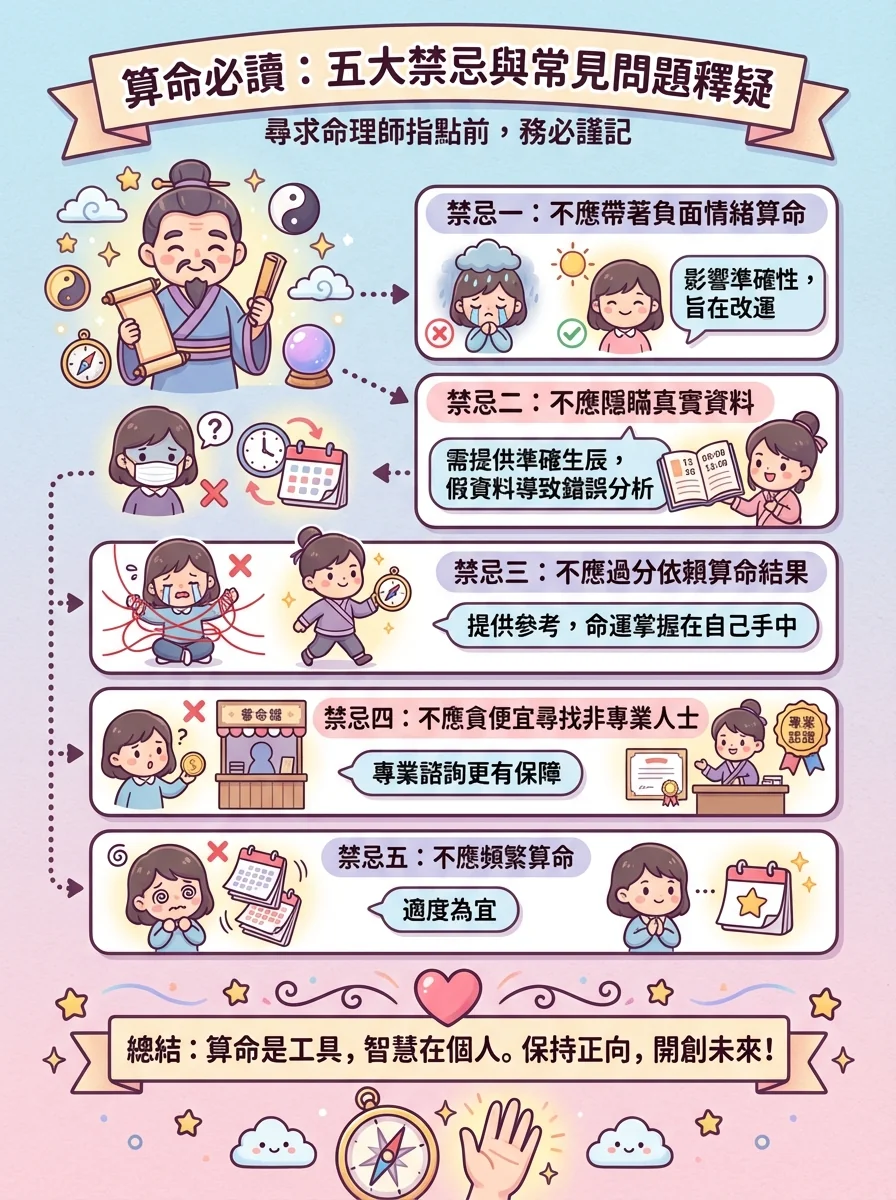
Before seeking guidance from a fortune teller, you must remember the following five major taboos. Otherwise, you might end up worse off, with more loss than gain!
- Taboo One: Don't go for fortune-telling with negative emotions. Many people rush for help when things aren't going well, but if you're filled with negative energy, it can affect the accuracy of the consultation. Remember, fortune-telling is for understanding yourself, attracting good fortune, and avoiding misfortune, not for amplifying negative emotions.
- Taboo Two: Don't conceal true information. No matter which fortune-telling method you use, you must provide accurate birth year, month, day, and time. Some people give false information to protect their privacy, but this leads to completely wrong analysis results, wasting money and time.
- Taboo Three: Don't overly rely on fortune-telling results. Fortune-telling aims to provide reference and direction, not for you to follow blindly. Destiny is ultimately in your own hands. Fortune-telling is just a tool; the final decision-maker is still yourself.
- Taboo Four: Don't choose unprofessional people just because they're cheap. There are many people online claiming to be fortune tellers with very low fees but questionable professionalism. Professional fortune-telling consultations, although more expensive, offer greater accuracy and safety.
- Taboo Five: Don't get fortune-telling too frequently. Some people have the habit of consulting different fortune tellers every month, but interpretations from different schools may differ or even contradict each other, leaving you more confused. Not only does it waste money, but it also makes you indecisive. It's recommended to have a consultation only every six months to a year.
Additionally, according to Five Elements theory, wearing clothes of the right color in specific years can help enhance luck. For example, 2026 is the Bing Wu Horse Year, belonging to the Fire element. Fortune-telling experts point out that friends born in the Year of the Horse, due to offending Tai Sui, are advised to avoid wearing overly bright red clothes and can opt for light red or pink instead. Friends born in the Year of the Pig and Rat belong to the Water element, which clashes with Fire, so they are advised to avoid red. Those born in the Year of the Pig can wear bright white or other bright colors, while those born in the Year of the Rat can wear water blue or orange to help enhance wealth luck. However, these folk beliefs are for reference only; don't become overly superstitious.
Common Questions Explained
1. Is Ba Zi fortune-telling accurate? Why do different masters say different things?
Accuracy largely depends on the fortune teller's skill, experience, and interpretation angle. Different masters have different lineages, understandings of ancient texts, and practical experience, so variations in interpretation are normal. A good master will combine your actual situation for analysis, not rigidly follow the book.
2. Is it dangerous to give my Ba Zi information to a stranger?
This is a very common misconception. From the perspective of formal fortune-telling, it is impossible to harm someone using just their Ba Zi information. A professional and ethical master will strictly keep client information confidential. For peace of mind, you should choose a master with a good reputation, public reviews, and transparent fees.
3. What if I don't know my exact birth time?
The most important information is the accurate Gregorian birth year, month, day, time, and location. If you're unsure of the time, first try to find your birth certificate or ask elders. If you really can't find it, provide an approximate time range. Experienced masters can use the "chart rectification" method, based on important past events in your life, to deduce your birth hour.
4. What are the practical uses of fortune-telling?
Besides predicting fortune, it can help you deeply understand your personality strengths and weaknesses, allowing you to play to your strengths and avoid weaknesses in your career; analyze interpersonal relationships (e.g., compatibility through Ba Zi); or choose an auspicious time for important decisions (e.g., marriage, opening a business), hoping for smooth sailing.
5. Is Ba Zi fortune-telling omnipotent?
Of course not. It can see a person's personality tendencies, the ups and downs of major life cycles, opportunities, and challenges, but it cannot predict very specific details, like lottery numbers. Fortune-telling reveals "trends" and "possibilities"; personal effort and choices later in life are equally important. If you still have many questions, the best method is to try it yourself. You might want to use Master Xuan Shen's Free Divination Service. It's completely free and risk-free, can help analyze your 2026 Annual Fortune, with results in as fast as 3 hours. It's a great start!
Do fortune tellers have licenses?
In Hong Kong and most regions, fortune tellers do not have statutory practicing licenses like doctors or lawyers. However, there are many certificates issued by different divination associations or academies in the market, used to prove that students have completed specific courses. When choosing a fortune teller, besides referring to these certificates, the master's practical experience, reputation, and client testimonials are often more valuable for reference, as this field heavily relies on accumulated experience and empirical evidence.
What are the approximate fortune-telling fees in Hong Kong for 2026?
As of 2026, the fee range for fortune tellers in Hong Kong is very broad, catering to different budgets. The price mainly depends on the master's fame, qualifications, and the complexity of the service. Generally speaking, a basic personal Ba Zi or Zi Wei Dou Shu reading might cost from over a thousand to several thousand Hong Kong dollars. If more complex services are involved, such as feng shui layout or company naming, the fees will be higher.
What does 'fortune teller' mean?
A "fortune teller" refers to a professional who uses Chinese traditional metaphysical arts and divination techniques, such as Ba Zi (Four Pillars of Destiny), Zi Wei Dou Shu (Purple Star Astrology), face reading, feng shui, etc., to analyze a person's destiny trajectory, personality traits, and fortune fluctuations. Their role is not only to predict the future but, more importantly, to act as a life consultant, providing directional advice for clients in areas like career, relationships, and health, helping them attract good fortune and avoid misfortune.
Which fortune-telling method is the most accurate?
Actually, there's no single method that is "the most accurate," because different divination systems, such as Ba Zi, Zi Wei Dou Shu, Qi Men Dun Jia, etc., have different theoretical foundations and focuses. The accuracy of a method depends not on the tool itself but on how profound the fortune teller's skill is in using it and whether they can choose the most suitable analysis method for your problem. Therefore, choosing the right master is more important than choosing the method.
Can an ordinary person self-study to become a fortune teller?
Theoretically, anyone can self-study fortune-telling through books, online courses, etc. However, metaphysical arts are vast and profound. Self-study alone can easily lead to misunderstandings or bottlenecks. If you want to become a professional fortune teller, apprenticing under a master or enrolling in a systematic course is more efficient because an experienced master can impart essential knowledge, answer questions, and provide a large number of practical cases to hone your skills.
How to choose a good fortune teller? Any tips?
When selecting a fortune teller, you can start by looking into their background and specialties to understand which divination methods they primarily use. Secondly, you can get recommendations from friends or check client reviews on neutral forums or social platforms. Most importantly, be wary of masters who exaggerate, guarantee 100% accuracy, or use scare tactics to pressure you into buying expensive luck-changing products. A good consultation process should be enlightening, not anxiety-inducing.
What's the difference between online and in-person fortune-telling? Is it safe?
The biggest advantage of online fortune-telling is convenience and speed, without geographical limitations, while in-person sessions allow for more direct interaction and communication with the master. Regarding safety, whether online or in-person, you should choose a reputable master. For online consultations, be especially careful to protect personal privacy. Don't casually provide excessive unnecessary sensitive information, such as detailed home address, bank account details, etc. It's best to make appointments through official or reputable platforms.
What problems can a fortune teller help me solve?
A fortune teller can provide reference opinions in many areas of life. For example, when you feel lost about career development, they can analyze your talents and suitable industries from your destiny chart; on the relationship front, they can analyze your interaction patterns with your partner; for financial management, they can indicate which years are more favorable for wealth. Even for major decisions like immigration or starting a business, a fortune teller can help analyze the auspiciousness or inauspiciousness of the timing.
If the fortune-telling predicts something bad in the future, how can it be resolved?
The purpose of fortune-telling analysis is to "attract good fortune and avoid misfortune," not to create panic. If a professional fortune teller foresees potential future challenges, they will provide specific advice for coping. So-called "resolution" often refers to adjustments through later efforts, such as furthering education during unfavorable cycles or being more cautious in dealing with people and matters. Sometimes, it may also involve combining feng shui layouts or choosing auspicious dates to mitigate negative influences.
Is fortune-telling analysis equivalent to fatalism? Do I still have free will?
This is a common misconception. Fortune-telling analysis is not equivalent to fatalism. You can think of your destiny chart as a life map or a weather forecast; it shows your innate potential and fortune fluctuations. But how you walk this path and how you cope when encountering bad weather is entirely up to your free will and later efforts. Knowing your destiny is to better navigate it, not to be bound by it.